

Taking the Weight Off Your Business Income. Fearlessly.


Tax preparation is what happens every spring: gathering documents, filling out forms, and
reporting what already occurred. Tax planning is what happens the other eleven months of the
year — the decisions that determine how big the number on that form turns out to be.
Preparation weighs the elephant. Planning decides how much you feed it in the first place.
Tax preparation is retrospective — a compliance exercise based on decisions you’ve already
made.
Tax planning is proactive — timing income and expenses, choosing retirement contributions,
and structuring purchases before the year closes, while there’s still room to change the
outcome.
Business owners who only prepare taxes are, in effect, agreeing to whatever size the elephant
grew to be. Business owners who plan get a say in its diet.
Farfalline is Italian for “little butterflies,” and this Farfalline certainly resembles its namesake. Each butterfly-like bowtie sports either green and orange stripes or red and yellow stripes—all derived from plant-based organic ingredients like paprika, turmeric, spinach, and beet root powders. Cooked al dente, this Pasta becomes a proverbial canvas, ready to be coated with another innovatively colorful product—Trader Joe’s Organic Roasted Red Pepper and Almond Pesto Sauce. In a twist on tradition, this Pesto is a fiery red-orange, courtesy of organic red bell peppers. The peppers are roasted, then blended with PDO Pecorino Romano, almonds, onions, garlic, and a handful of herbs; finally, the mélange is emulsified with organic EVOO and sunflower oil, and fine-tuned with touches of organic cane sugar and apple cider vinegar. A Sauce-y masterpiece, indeed.
We’re offering 16-ounce bags of Organic Striped Farfalline for $3.49 each, and 9.87-ounce jars of Organic Roasted Red Pepper and Almond Pesto Sauce for $3.99 each. You’ll find them in our grocery aisle.
Under most circumstances, a crispy, crunchy, cocoa crème-filled wafer cookie would be reason enough to get excited. When you add peanut butter to the mix, well, now that’s where things get positively thrillingly, that’s the precise pairing that powers Trader Joe’s PB & C Snack Duo.
Made for us by the same supplier behind our celebrated PB & J Snack Duo, TJ’s PB & C Snack Duo exchanges one iconic flavor combination for another, for an equally delicious end result. Each box comes with six individual snack-packs; each snack-pack contains eight button-shaped, cocoa crème-filled wafer cookies and a sidecar of soft, slightly salted peanut butter dip. Together, they’re a sweet and savory snack that’s nearly as fun to dunk as it is to eat—perfect for kids and kids at heart. They’re ideal for school lunches, and we’ll admit to stashing a few in our desk drawers for emergency snack attacks.
We’re selling each 12.1-ounce box of six PB & C Snack Duos for $3.99, every single day.
I’m endlessly captivating and, thanks to my farfalle flair, captivatingly chromatic, too!
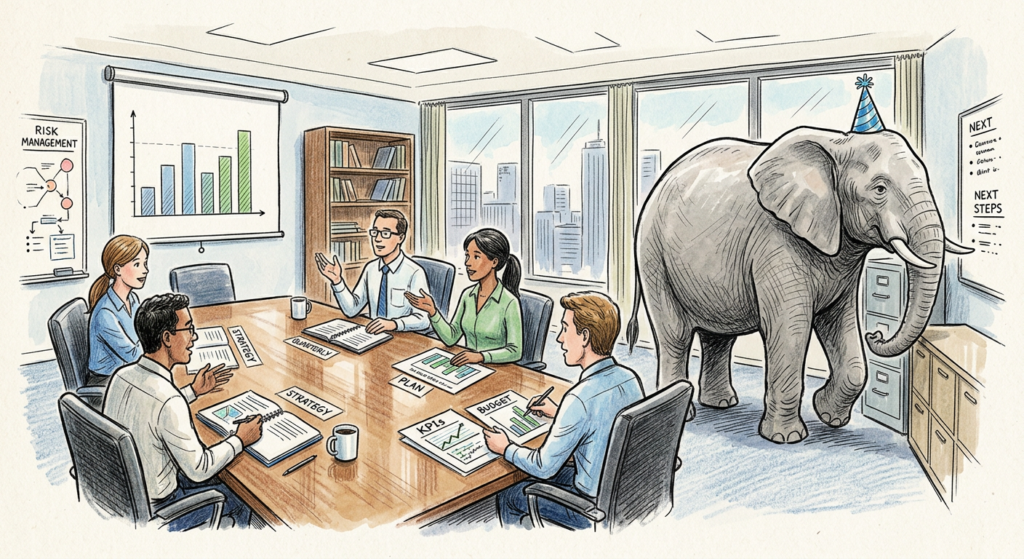
Tax preparation is what happens every spring: gathering documents, filling out forms, and reporting what already occurred. Tax planning is what happens the other eleven months of the year: the decisions that determine how big the number on that form turns out to be. Preparation weighs the elephant. Planning decides how much you feed it in the first place.
Tax preparation is retrospective a compliance exercise based on decisions you’ve already made.
Tax planning is proactive: timing income and expenses, choosing retirement contributions, and structuring purchases before the year closes, while there’s still room to change the outcome.
Business owners who only prepare taxes are, in effect, agreeing to whatever size the elephant grew to be. Business owners who plan get a say in its diet.
How your business is legally structured sole proprietorship, LLC, S-corporation, or C-corporation isn’t just a paperwork decision. It’s one of the biggest levers on how much of your income the elephant gets to claim.
Sole proprietorship / single-member LLC: business income is reported directly on your personal return, and all of it is subject to self-employment tax on top of income tax the elephant eats twice.
S-corporation election: lets you split income between a reasonable salary (subject to payroll tax) and distributions (which aren’t), shrinking the elephant’s self-employment-tax appetite, though it adds payroll and filing complexity.
C-corporation: pays its own corporate tax rate, separate from your personal return; useful in specific situations, but it can create double taxation if profits are later distributed as dividends.
There’s no universally “right” entity the right one depends on your income level, growth plans, and how much complexity you’re willing to manage. But the choice is one of the few places you get to decide, in advance, how much space you’re giving the elephant to grow.
If you’re a W-2 employee, your employer quietly feeds the elephant a little bit every paycheck through withholding. If you’re self-employed or receive 1099 income, nobody’s doing that for you, which means the full weight of the tax bill shows up all at once unless you plan for it.
Self-employed taxpayers owe both income tax and self-employment tax (currently 15.3%, covering Social Security and Medicare) on their net earnings a cost W-2 employees split with their employer, but self-employed taxpayers cover in full.
Because there’s no automatic withholding, the IRS expects quarterly estimated tax payments due in April, June, September, and January. Skip them, and you’re not just delaying the bill; you’re adding underpayment penalties on top of it.
The most common mistake we see: treating 1099 income as if it were take-home pay, spending it as it comes in, and then discovering in April that a third of it was never really theirs to spend. Setting aside 25–30% of every 1099 payment as it arrives is the simplest way to make sure the elephant’s portion is already set aside before you’ve mentally spent it.
The elephant in the room isn’t going anywhere: income tax is a permanent fixture of running a business. But it doesn’t have to be a surprise every April. With the right planning, the right entity structure, and a system for setting aside self-employment tax as it’s earned, you decide how much room the elephant takes up, instead of finding out after the fact.
[Schedule a consultation] with our team, and we’ll help you figure out exactly where your
elephant could stand to lose some weight.
Looks like you're in Saudi Arabia
Visit our dedicated Saudi Arabia site for local services, pricing, and support in your region.
